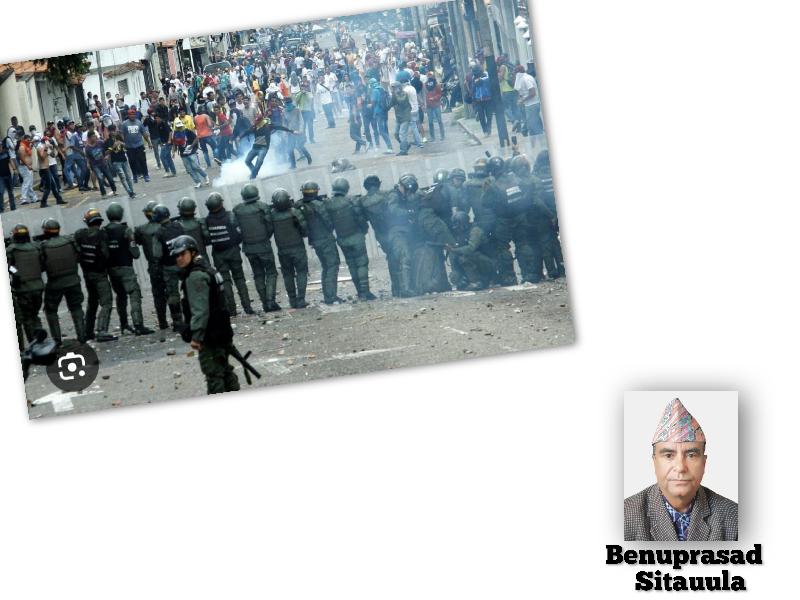
• Sovereignty Under Siege : Venezuela, U.S. Power Politics, and the Crisis of the Global Order

    PUBLIC REPORTER   - दिल्ली
    Sovereignty Under Siege
    संपादकीय   - दिल्ली[06-01-2026]
  • Venezuela, the United States, and the Limits of Power Politics


    Recent developments between the United States and Venezuela once again reveal the enduring tension between power politics and the normative foundations of the international order. In early January 2026, Washington reportedly moved beyond conventional coercive diplomacy toward a dramatic assertion of force: a U.S. operation seized Venezuelan President Nicolás Maduro, while American authorities signaled intensified oil sanctions and deeper involvement in shaping Venezuela’s political future.

    Beyond the shock value of the headlines, the more significant concern lies in how such actions reshape the principles of sovereignty, intervention, and international governance in the twenty-first century.

    The post–Cold War international system has consistently struggled to reconcile ideals with political realities. On paper, sovereign equality and territorial integrity remain enshrined in the United Nations Charter. In practice, however, powerful states frequently exert pressure—directly or indirectly—on weaker states whenever strategic, political, or economic interests are perceived to be at risk. Venezuela represents another manifestation of this long-standing contradiction, now intensified as sanctions appear to have evolved into open coercion.

    Supporters of U.S. policy argue that Venezuela’s political repression, economic mismanagement, and democratic regression justify exceptional measures. These issues cannot be dismissed. Venezuela has endured prolonged instability, economic collapse, and social suffering, with ordinary citizens bearing the greatest cost. Yet acknowledging internal governance failures does not automatically legitimize foreign intervention—particularly when such intervention is unilateral, legally contested, or driven by external interests rather than domestic consensus. History demonstrates that externally imposed solutions, even when framed as pro-democratic, often exacerbate polarization and conflict rather than resolve them.

    One of the most troubling aspects of the Venezuelan crisis is the growing blurring of boundaries between diplomacy, coercion, and intervention. Economic sanctions and political isolation are frequently portrayed as peaceful alternatives to military action, but their long-term consequences can be severe. Sanctions restrict state capacity, distort domestic incentives, and disproportionately burden civilian populations rather than political elites. In Venezuela’s case, oil restrictions directly undermine government revenues and limit the ability to finance essential imports, creating humanitarian effects that are structural and enduring. Recent reports of production declines and export disruptions illustrate how quickly economic pressure translates into domestic instability.

    Geopolitics further complicates the situation. Venezuela’s vast oil reserves make it strategically significant within global energy markets, and the regulation of foreign corporate access highlights the instrumentalization of energy as a tool of diplomatic rivalry. This reality inevitably casts doubt on stated motivations. Distinguishing between genuine concern for democracy and human rights and strategic self-interest becomes difficult, particularly given the long history of interventions in resource-rich regions.

    The crisis also exposes the erosion of multilateralism. International institutions appear increasingly sidelined as major powers pursue competing agendas. While Russia and China criticize U.S. actions toward Venezuela, they themselves face accusations of norm violations within their own spheres of influence. What emerges is not a principled alternative order but a fragmented one—where rules are selectively applied, enforcement is inconsistent, and legitimacy is increasingly derived from power rather than process.

    The strongest defense of extraordinary intervention rests on the argument that regimes responsible for severe human rights abuses, democratic breakdown, or transnational criminality forfeit normal protections, necessitating external action in the absence of internal accountability. Even if one accepts this diagnosis, unilateral enforcement sets a dangerous precedent. It normalizes regime change, capture operations, and sweeping economic restrictions as substitutes for collective decision-making. The costs are borne not only by the targeted state but also by the international legal framework itself, as rules designed to protect all states from unjust coercion are steadily weakened.

    For India, the Venezuelan episode reinforces the enduring relevance of foreign policy principles such as sovereignty, non-interference, and peaceful dialogue. At the same time, it underscores the need for realism in navigating energy security and diplomatic priorities in an increasingly polarized world. A balanced, non-aligned posture allows India to avoid rigid bloc politics, maintain credibility across divides, and preserve open channels of communication—often essential for de-escalation.

    More broadly, the crisis serves as a warning to small and middle powers. When international rules are subordinated to strategic interests, states lacking economic or military leverage become increasingly vulnerable. Sovereignty loses meaning when it is upheld rhetorically yet compromised in practice.

    Ultimately, the Venezuelan question is not about choosing sides but about recognizing limits. Power—whether justified in the name of democracy or security—is never without consequences. Sustainable solutions require inclusive dialogue, regional engagement, and genuine multilateral cooperation rather than unilateral pressure. Preventing similar crises in the future demands renewed commitment to core principles: respect for sovereignty, accountability of international institutions, and restraint by powerful states. These are not idealistic aspirations but practical necessities for global stability.

    The crisis in Venezuela thus reflects a broader dilemma confronting the world today: whether international politics will be governed by shared rules or dominated by the interests of the powerful. The answer will shape not only the fate of individual nations but also the credibility and legitimacy of the international system itself.


    Benuprasad Sitaula Bhardhwaj
    Principal, Nepal DVM Global Academy, Nepal
    Post-Doctoral Fellow, ERU, USA
    Email: Sitaulabenu6@gmail.com



  • Sovereignty Under Siege : Venezuela, U.S. Power Politics, and the Crisis of the Global Order

    PUBLIC REPORTER   - दिल्ली
    Sovereignty Under Siege
    संपादकीय   - दिल्ली[06-01-2026]

    Venezuela, the United States, and the Limits of Power Politics


    Recent developments between the United States and Venezuela once again reveal the enduring tension between power politics and the normative foundations of the international order. In early January 2026, Washington reportedly moved beyond conventional coercive diplomacy toward a dramatic assertion of force: a U.S. operation seized Venezuelan President Nicolás Maduro, while American authorities signaled intensified oil sanctions and deeper involvement in shaping Venezuela’s political future.

    Beyond the shock value of the headlines, the more significant concern lies in how such actions reshape the principles of sovereignty, intervention, and international governance in the twenty-first century.

    The post–Cold War international system has consistently struggled to reconcile ideals with political realities. On paper, sovereign equality and territorial integrity remain enshrined in the United Nations Charter. In practice, however, powerful states frequently exert pressure—directly or indirectly—on weaker states whenever strategic, political, or economic interests are perceived to be at risk. Venezuela represents another manifestation of this long-standing contradiction, now intensified as sanctions appear to have evolved into open coercion.

    Supporters of U.S. policy argue that Venezuela’s political repression, economic mismanagement, and democratic regression justify exceptional measures. These issues cannot be dismissed. Venezuela has endured prolonged instability, economic collapse, and social suffering, with ordinary citizens bearing the greatest cost. Yet acknowledging internal governance failures does not automatically legitimize foreign intervention—particularly when such intervention is unilateral, legally contested, or driven by external interests rather than domestic consensus. History demonstrates that externally imposed solutions, even when framed as pro-democratic, often exacerbate polarization and conflict rather than resolve them.

    One of the most troubling aspects of the Venezuelan crisis is the growing blurring of boundaries between diplomacy, coercion, and intervention. Economic sanctions and political isolation are frequently portrayed as peaceful alternatives to military action, but their long-term consequences can be severe. Sanctions restrict state capacity, distort domestic incentives, and disproportionately burden civilian populations rather than political elites. In Venezuela’s case, oil restrictions directly undermine government revenues and limit the ability to finance essential imports, creating humanitarian effects that are structural and enduring. Recent reports of production declines and export disruptions illustrate how quickly economic pressure translates into domestic instability.

    Geopolitics further complicates the situation. Venezuela’s vast oil reserves make it strategically significant within global energy markets, and the regulation of foreign corporate access highlights the instrumentalization of energy as a tool of diplomatic rivalry. This reality inevitably casts doubt on stated motivations. Distinguishing between genuine concern for democracy and human rights and strategic self-interest becomes difficult, particularly given the long history of interventions in resource-rich regions.

    The crisis also exposes the erosion of multilateralism. International institutions appear increasingly sidelined as major powers pursue competing agendas. While Russia and China criticize U.S. actions toward Venezuela, they themselves face accusations of norm violations within their own spheres of influence. What emerges is not a principled alternative order but a fragmented one—where rules are selectively applied, enforcement is inconsistent, and legitimacy is increasingly derived from power rather than process.

    The strongest defense of extraordinary intervention rests on the argument that regimes responsible for severe human rights abuses, democratic breakdown, or transnational criminality forfeit normal protections, necessitating external action in the absence of internal accountability. Even if one accepts this diagnosis, unilateral enforcement sets a dangerous precedent. It normalizes regime change, capture operations, and sweeping economic restrictions as substitutes for collective decision-making. The costs are borne not only by the targeted state but also by the international legal framework itself, as rules designed to protect all states from unjust coercion are steadily weakened.

    For India, the Venezuelan episode reinforces the enduring relevance of foreign policy principles such as sovereignty, non-interference, and peaceful dialogue. At the same time, it underscores the need for realism in navigating energy security and diplomatic priorities in an increasingly polarized world. A balanced, non-aligned posture allows India to avoid rigid bloc politics, maintain credibility across divides, and preserve open channels of communication—often essential for de-escalation.

    More broadly, the crisis serves as a warning to small and middle powers. When international rules are subordinated to strategic interests, states lacking economic or military leverage become increasingly vulnerable. Sovereignty loses meaning when it is upheld rhetorically yet compromised in practice.

    Ultimately, the Venezuelan question is not about choosing sides but about recognizing limits. Power—whether justified in the name of democracy or security—is never without consequences. Sustainable solutions require inclusive dialogue, regional engagement, and genuine multilateral cooperation rather than unilateral pressure. Preventing similar crises in the future demands renewed commitment to core principles: respect for sovereignty, accountability of international institutions, and restraint by powerful states. These are not idealistic aspirations but practical necessities for global stability.

    The crisis in Venezuela thus reflects a broader dilemma confronting the world today: whether international politics will be governed by shared rules or dominated by the interests of the powerful. The answer will shape not only the fate of individual nations but also the credibility and legitimacy of the international system itself.


    Benuprasad Sitaula Bhardhwaj
    Principal, Nepal DVM Global Academy, Nepal
    Post-Doctoral Fellow, ERU, USA
    Email: Sitaulabenu6@gmail.com